
Money Time Strategy: 12 Winning Tips & Systems for 2026
You want to know how to play money time and win, and the search is understandable. But one point matters from the first line: Money Time is a game of chance. Each spin is random and independent, so no betting pattern predicts the next result or locks in winning at money time.
So what is a money time casino strategy for? Strategy here means controlling risk, choosing bets with clear math behind them, and setting rules that protect a bankroll during high-volatility swings. A good plan also helps keep sessions structured, instead of reacting to short streaks.
This guide breaks down the wheel’s probabilities, explains what the bonus rounds and Bet Spot Boosters change (and what they do not), and outlines practical systems for different risk profiles. The goal is a workable money time betting strategy - not a promise of profit, but a disciplined framework for smarter decisions.
Check out the proof from our live test where we turned €50 into €375. See the full breakdown here: Money Time Results: 2 Tested Strategies That Worked (Real Spin Data).
The Foundation: Understanding Money Time Odds & Payouts
Money Time runs on a 54-segment wheel. Bets fall into two groups: number segments (1, 2, 5, 10) and four bonus rounds (Cash Roll, Coin Rush, Bank Heist, Money Time). A bet wins only when the wheel lands on that exact segment.
The key strategic point is frequency vs. payout. The 1 segment appears most often, so it hits frequently but pays 1:1. Bonus rounds take fewer segments, so they trigger less often, but they are the route to the largest outcomes. RTP sits around 96.25% to 96.56% depending on the bet. The top RTP (96.56%) applies to 2, 5, and the Money Time bonus. Volatility is high, and the maximum win reaches 40,000x in Bank Heist.
Use the table below as the baseline for every staking decision.
Money Time Bets, Payouts, and Probabilities
| Bet Option | Payout (without multipliers) | Probability of Hitting (%) |
|---|---|---|
| 1 | 1:1 | |
| 2 | 2:1 | |
| 5 | 5:1 | |
| 10 | 10:1 | |
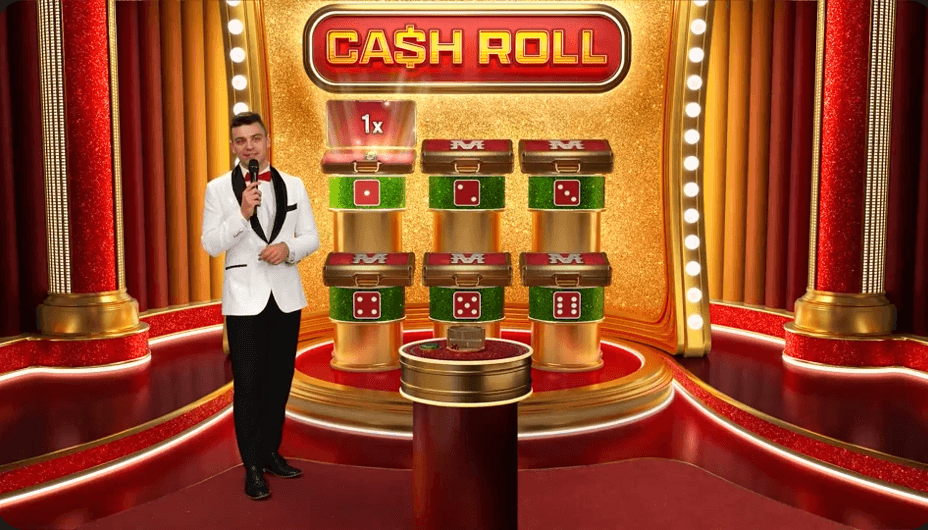
| Cash Roll | Bonus (1-100x) | 7.41% |
| Coin Rush | Bonus (3-500x) | 3.70% |
| Bank Heist | Bonus (5-500x) | 3.70% |
| Money Time | Bonus (10-580x) | 1.45% |
Note: Bet Spot Boosters add random multipliers (up to 50x) to specific segments after betting closes, which increases payout potential but does not change the underlying hit probabilities.
Core Money Time Strategies for Different Playstyles
No single money time betting strategy fits every playstyle. The right setup depends on bankroll size, tolerance for long losing stretches, and whether the session goal is time-on-table or bonus chasing. The three frameworks below cover low-variance play, high-variance play, and a structured middle ground that keeps exposure across multiple outcomes.
Strategy 1: The Conservative / Low-Volatility Approach
Focus: Betting on the most frequent outcomes - numbers 1 and 2.
Goal: Extend session length and reduce swings with smaller, more frequent hits.
The 1 segment covers 50% of the wheel (27 of 54). The 2 segment appears on 11 segments (20.37%). Combined, these bets land on roughly 70% of spins, but the trade-off is low payouts: 1:1 on 1 and 2:1 on 2.
How to apply it: Allocate 70% of the per-spin stake to 1 and 30% to 2. With a $100 session bankroll and a $10 flat stake, that is $7 on 1 and $3 on 2 each spin. This structure absorbs short downswings without forcing aggressive bet increases. Among the core numbers, the 2 bet also sits near the top for efficiency (96.51% RTP).
Who it’s for: Players prioritizing stability and longer sessions over bonus variance.
Strategy 2: The Aggressive / High-Volatility Approach
Focus: Targeting the bonus rounds - Cash Roll, Coin Rush, Bank Heist, and Money Time.
Goal: Prioritize access to the largest multipliers, accepting faster bankroll drawdowns.
Bonus rounds occupy 9 of 54 segments (16.66%). That limited footprint is the price for higher payout ceilings. Coin Rush and Bank Heist offer the biggest top-end outcomes (up to 25,000x and 40,000x), but their combined probability is 7.40%, which means long no-bonus stretches are normal.
How to apply it: Either split the stake across all four bonuses or concentrate on Coin Rush and Bank Heist only. With a $50 bankroll and a $10 total stake, a balanced split is $2.50 on each bonus. Expect frequent losing spins, and treat any Bet Spot Booster hit as variance, not a trigger to raise stakes.
Who it’s for: Players comfortable with high volatility and strict stop-loss rules.
Strategy 3: The Systematic / "Cover the Board" Approach
Focus: Splitting bets across 4-6 outcomes to stay active across numbers while keeping bonus exposure.
Goal: Balance hit rate with access to bonus upside in a controlled structure.
This system uses number bets as the stabilizer and bonus bets as the upside. A practical split is 40% on 1, 20% on 2, and 40% spread across two bonuses. With a $10 total stake, that looks like $4 on 1, $2 on 2, $2 on Cash Roll, and $2 on Coin Rush.
Why it works: The 1 and 2 segments deliver frequent returns (roughly 70% combined hit rate), which helps reduce session variance. The bonus portion keeps exposure to high-multiplier events without committing the full bankroll to low-frequency outcomes. As a money time casino strategy, it is a compromise: fewer dead spins than a pure bonus plan, with more upside than number-only play.
Who it’s for: Medium bankroll play where consistent engagement matters.
Top 5 Actionable Tips for Smarter Play in 2026
Common Betting Fallacies & Strategies to AVOID
FAQ: Money Time Strategy
There is no single best bet. For the highest hit rate, 1 leads at 50% with a 1:1 payout. For RTP efficiency, 2, 5, and Money Time sit at 96.56% RTP. For top-end outcomes, Bank Heist and Coin Rush carry the biggest maximum wins, but their hit rates are low. The odds table above is the correct reference point.
No. Money Time uses a certified Random Number Generator audited by independent testing labs. Each spin is independent and unbiased, so past results do not influence future outcomes. Any claim of a predictive method relies on a misunderstanding of randomness.
No. Every bet carries a built-in house edge (roughly 3.44%-4.44%), so no staking plan overcomes the math in the long run. Systems can control volatility, pace spending, and reduce risky decisions, but they cannot guarantee profit.